
Difference between white anodize and polish
The difference is whether or not the product has been anodized.
Manufacturers of machined aluminum products generally sell most of them after anodizing. Anodizing increases surface hardness, making them more scratch-resistant and improving corrosion resistance. At AELLA, we offer both anodized and non-anodized products. We refer to uncolored anodizing as "white anodizing." The reason we call it white is because it appears slightly whitish after anodizing. On the other hand, "polished" refers to the state of the aluminum as it is immediately after machining. While "polished" might sound like it has been buffed, it actually hasn't been polished in that sense. Please take a look at the comparison photos.
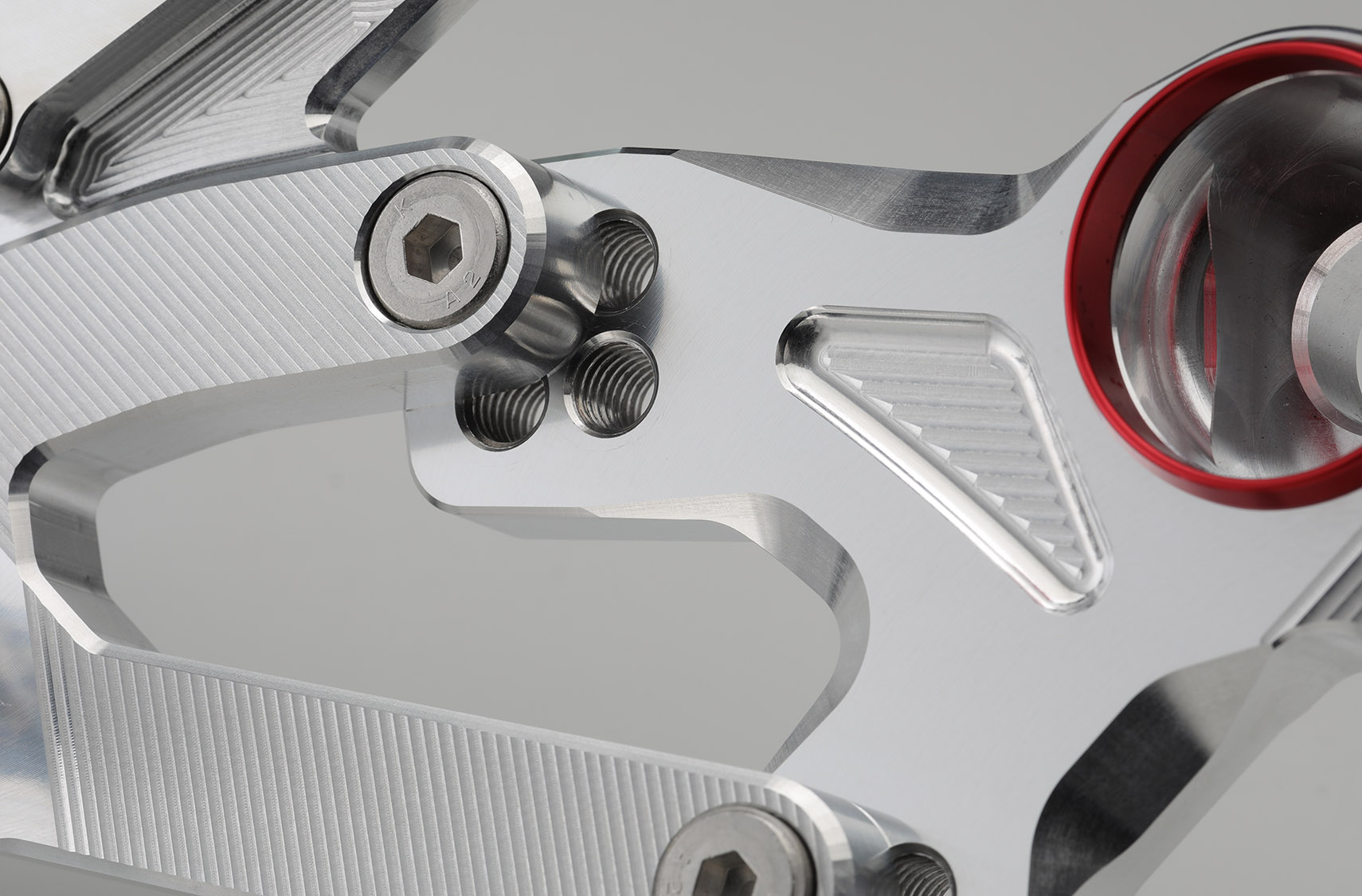
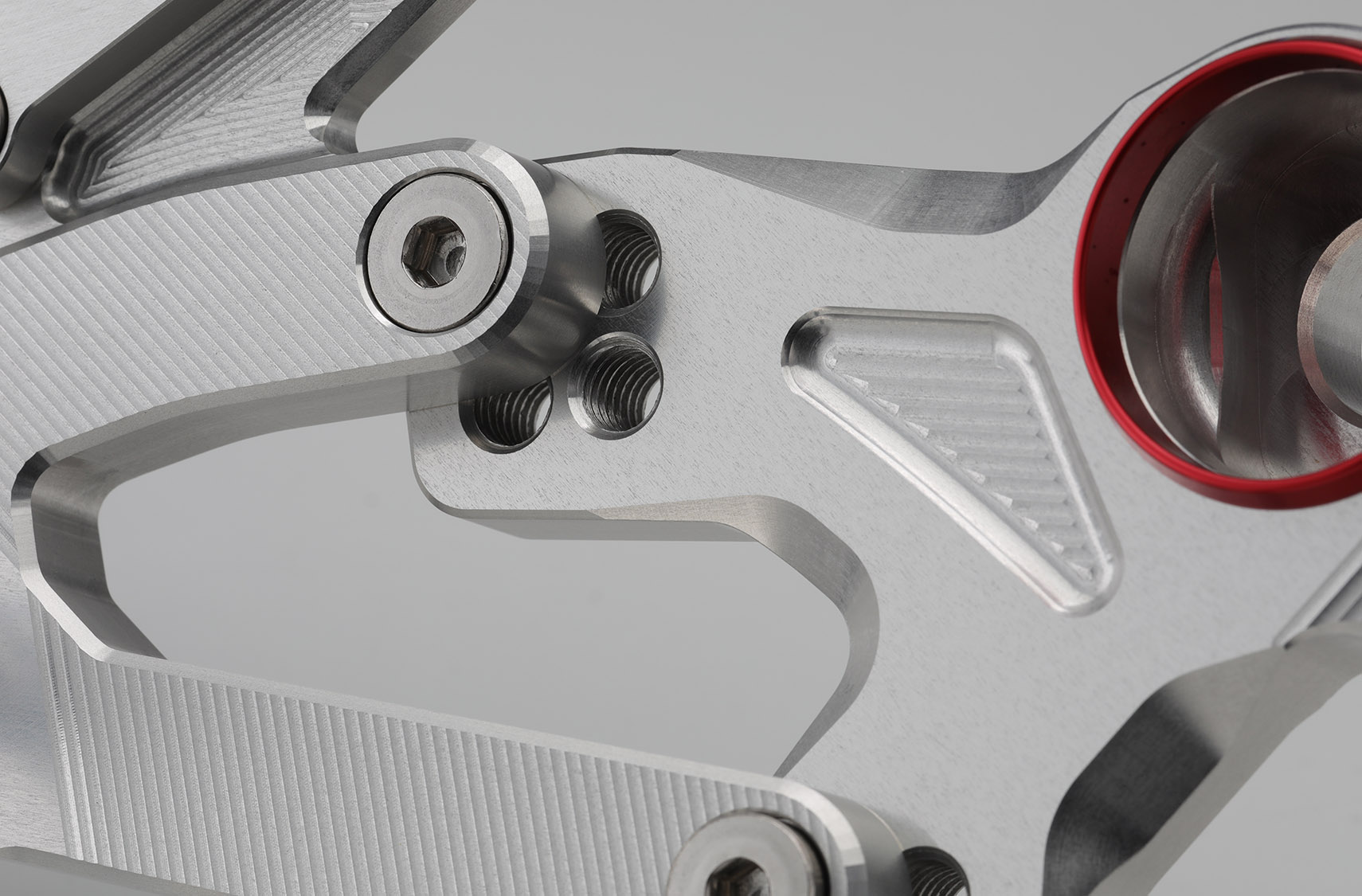
Left image: Polished / Right image: White Anodized
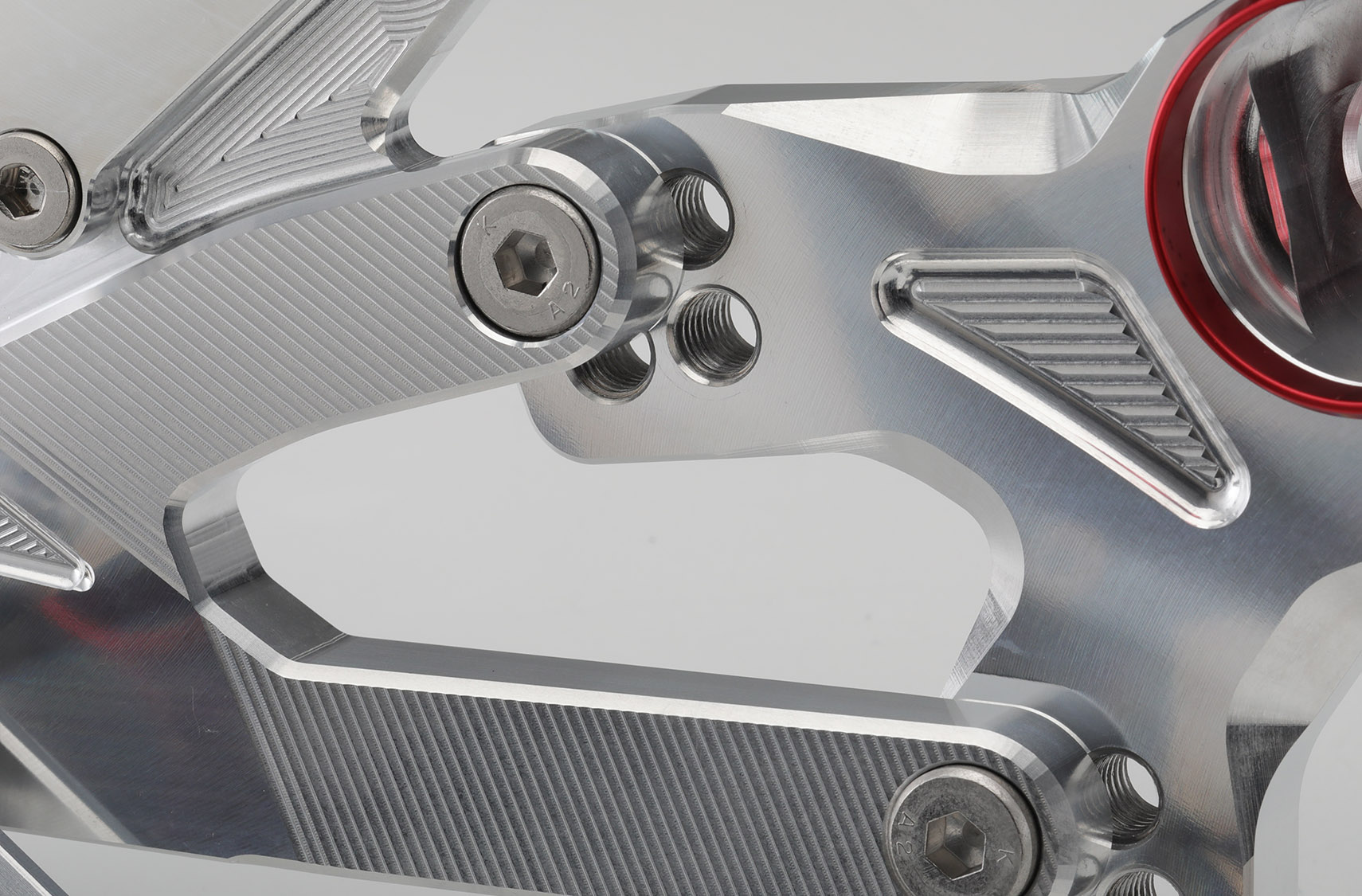
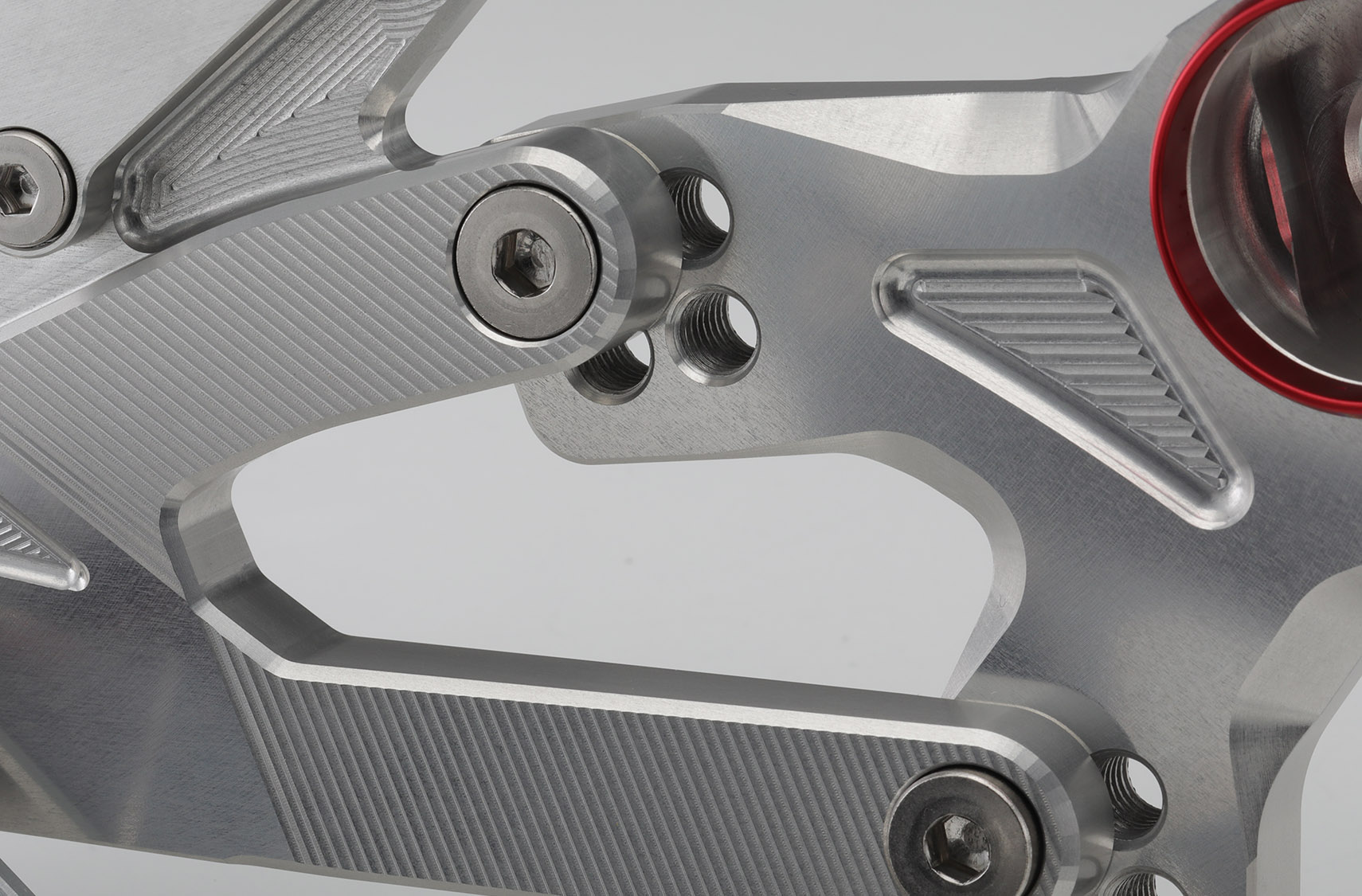
Left image: Polished / Right image: White Anodized
You can see that there is a difference in the surface gloss between polished and white anodized. While white anodized has a slightly rougher surface, polished has clearer reflections. However, unlike a mirror finish, it has a unique luster that can only be achieved through machining. (Click on the images to enlarge them.)
The 'strength' of being able to sell polished products
As mentioned earlier, polished finishes have a unique texture that can only be achieved through machining. For those who appreciate machined products, this luster will enhance their sense of ownership. So why isn't this polished finish generally sold? It's because it "requires an excessive amount of effort."
When machining parts from aluminum ingots, we try to minimize the amount of material removed to reduce costs. Areas that don't need to be machined, such as the back, are left as is and then anodized. This makes any unmachined areas less noticeable. For a polished finish, all surfaces, even those that don't technically need to be machined, are machined as if peeling off a thin layer. The back side is also machined; all surfaces are machined. Furthermore, extremely expensive cutting tools are used. Inexpensive cutting tools can result in rougher machined surfaces and an unsatisfactory finish. Since polished products are not anodized, all traces are visible. Although it requires additional cost to achieve this, it allows us to achieve a unique and beautiful finish, and that is AELLA's strength in offering it as a product.
Review
- White anodizing is uncolored anodizing.
- Polished is the state as it is after machining.
- Polished cannot hide any imperfections.
Did you understand the difference between polished and white anodized? We believe there are people who are interested in the polished finish. At AELLA, we are also delighted when we see bikes that use our polished products at meetings and elsewhere.
Finally, a note for those purchasing polished products. Due to its nature, a polished finish is prone to scratches, vulnerable to moisture and dirt, and susceptible to white rust. However, unless left unattended for extended periods, there is no decline in performance, but maintaining a perpetually clean appearance inevitably requires more effort compared to anodized products. To keep it in the best possible condition, we recommend: always keeping it dry, wiping the surface with a non-abrasive wax, taking care not to trap dust, and if minor scratches occur (as they cannot be removed), consistently polishing it to aim for a mirror finish. Anodized products, on the other hand, cannot be polished, so a polished finish is recommended for those who appreciate the aesthetic of natural aging.